Cortez, age 10, living with achondroplasia, and his mom.
I think people see Lawson for his character, but nobody realizes about these issues that affect him... because he just gets on with it and does as best he can.
- Chelsea and Thomas, parents of Lawson.
What is achondroplasia?
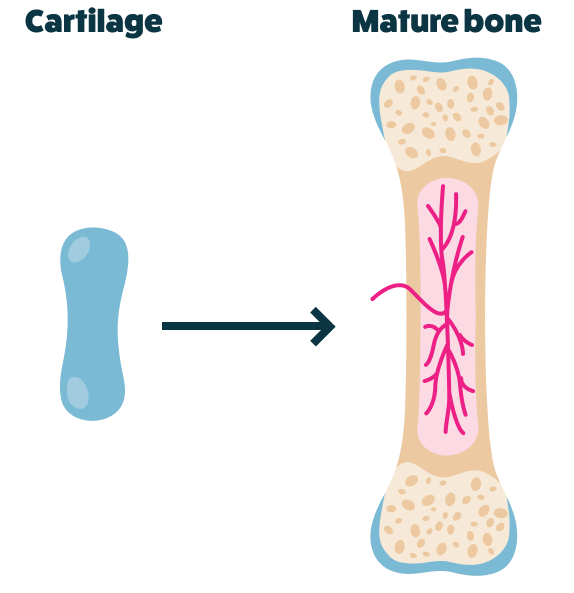
Achondroplasia is a rare genetic condition that affects how cartilage and bones grow and develop.
The condition leads to shorter arms and legs. It can also affect other parts of the body and may cause health challenges with breathing, movement, or development. These challenges can impact a child’s daily life and overall well-being.
What causes achondroplasia?
Achondroplasia is caused by a genetic variation (or change) in a gene called FGFR3. The gene variation is present from birth. Most of the time, this happens by chance. Sometimes, the change is inherited from a parent with achondroplasia.
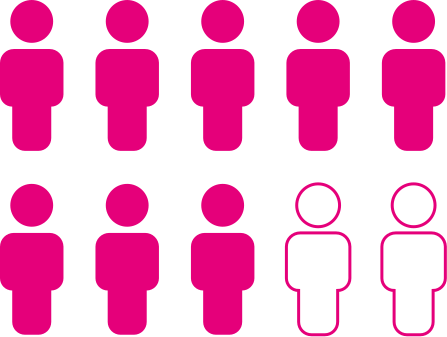
of children with achondroplasia are born to parents who do not have the condition
In the remaining 20% of cases, achondroplasia is inherited from a parent who has the condition.
How does FGFR3 affectbone growth?
FGFR3 works with CNP for balanced bone growth
Typically, FGFR3 works with a natural messenger in the body called CNP to help keep bone growth balanced
CNP sends its signals through a helper protein called NPR-B, and this pathway controls how bones grow
When FGFR3 is working correctly, it helps balance bone growth
However, in achondroplasia, FGFR3 is too active, which hinders bone growth and results in shorter bones
Does achondroplasia affectother parts of the body?
The effects of achondroplasia go beyond shorter height.
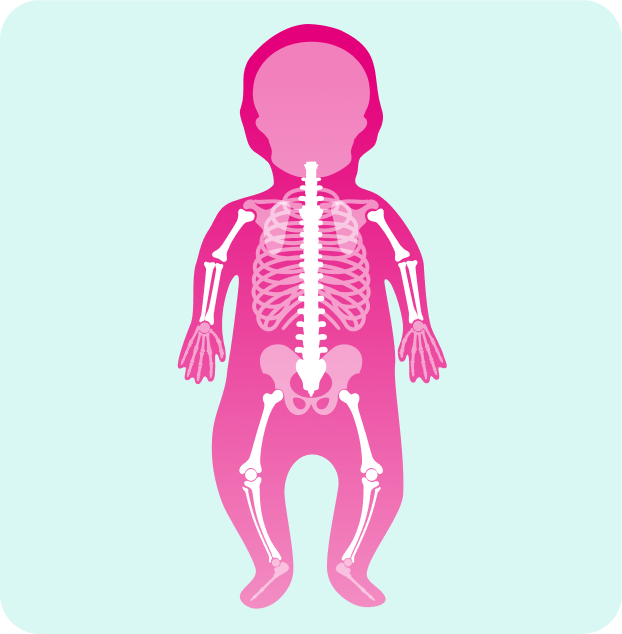
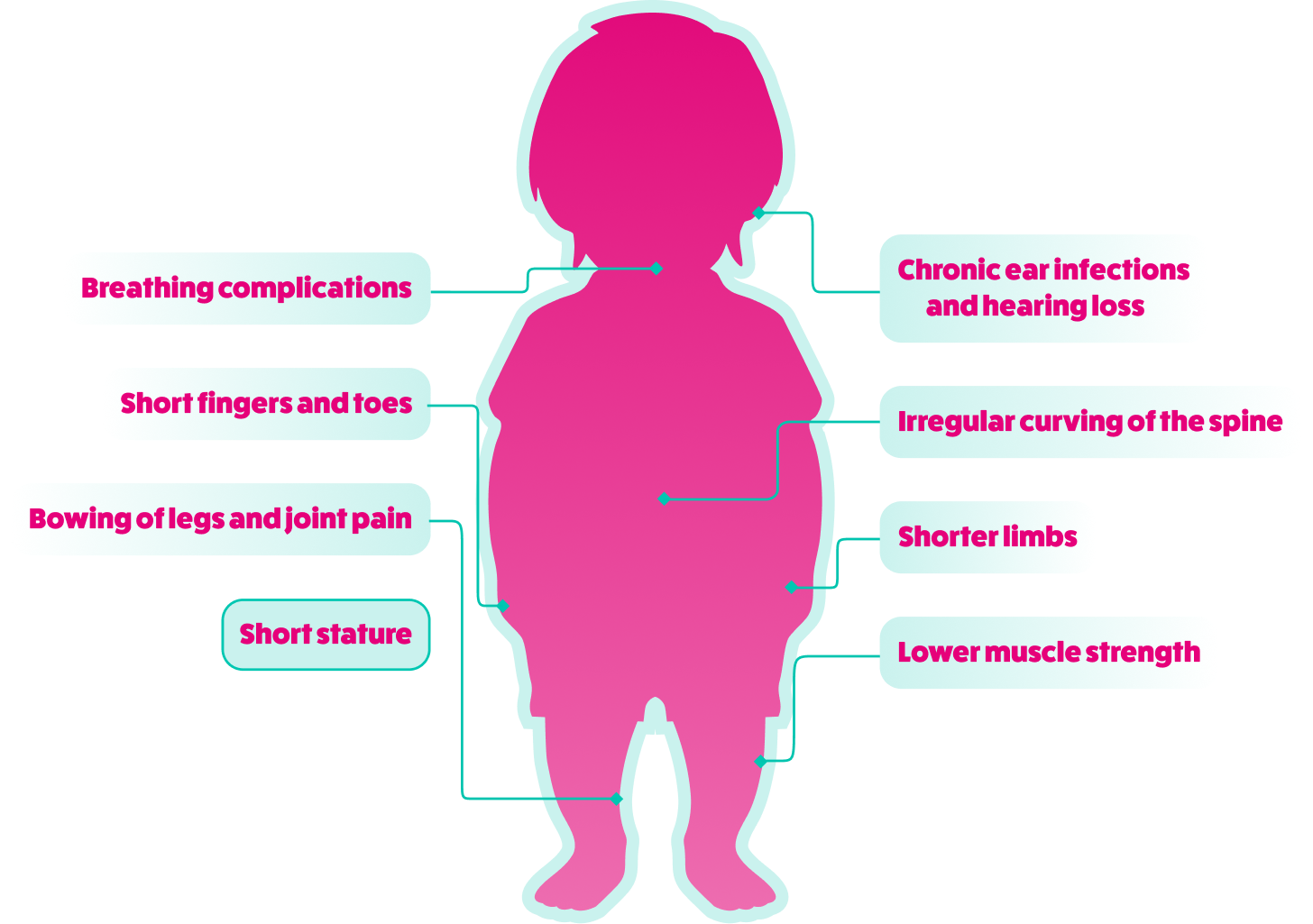
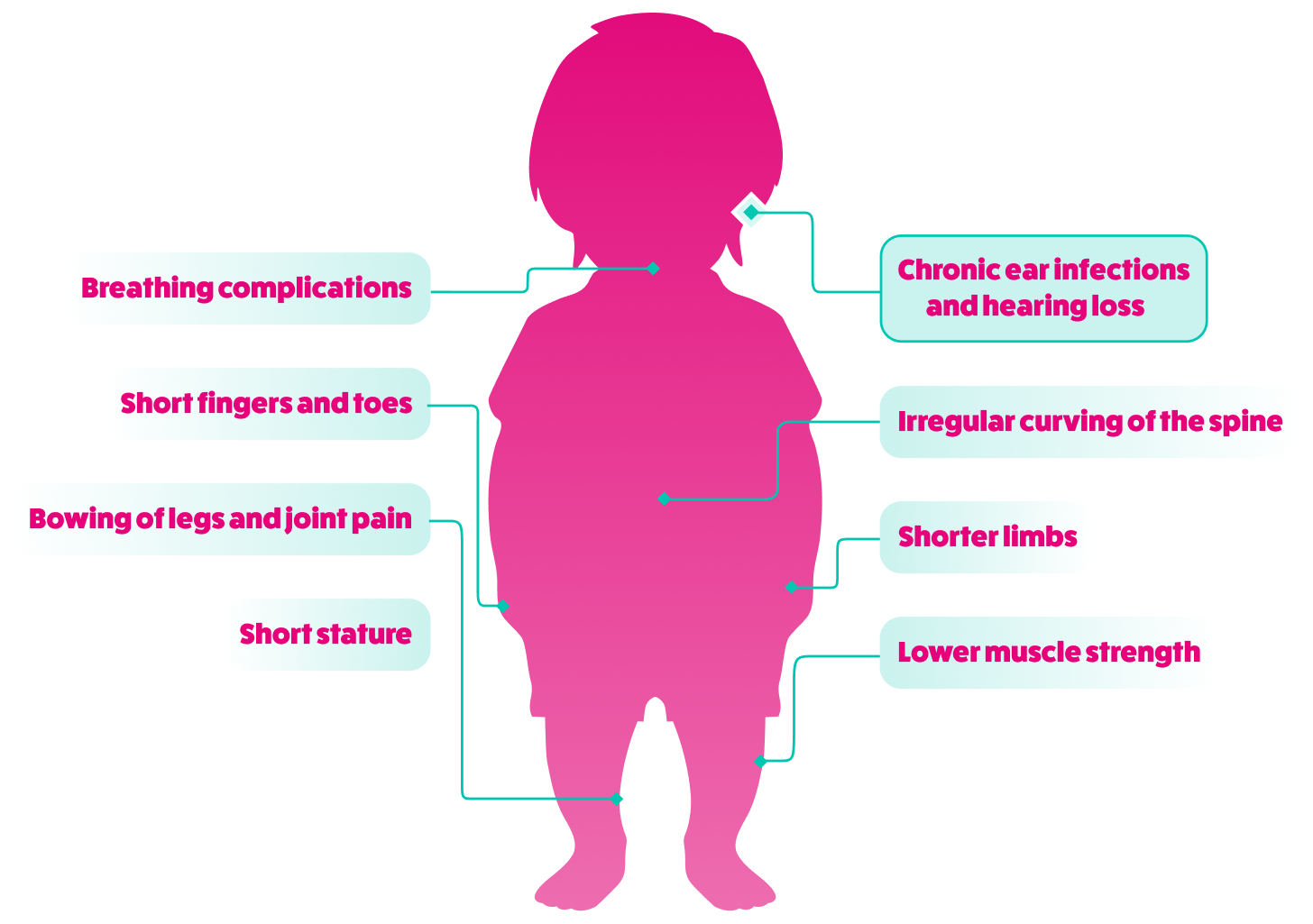
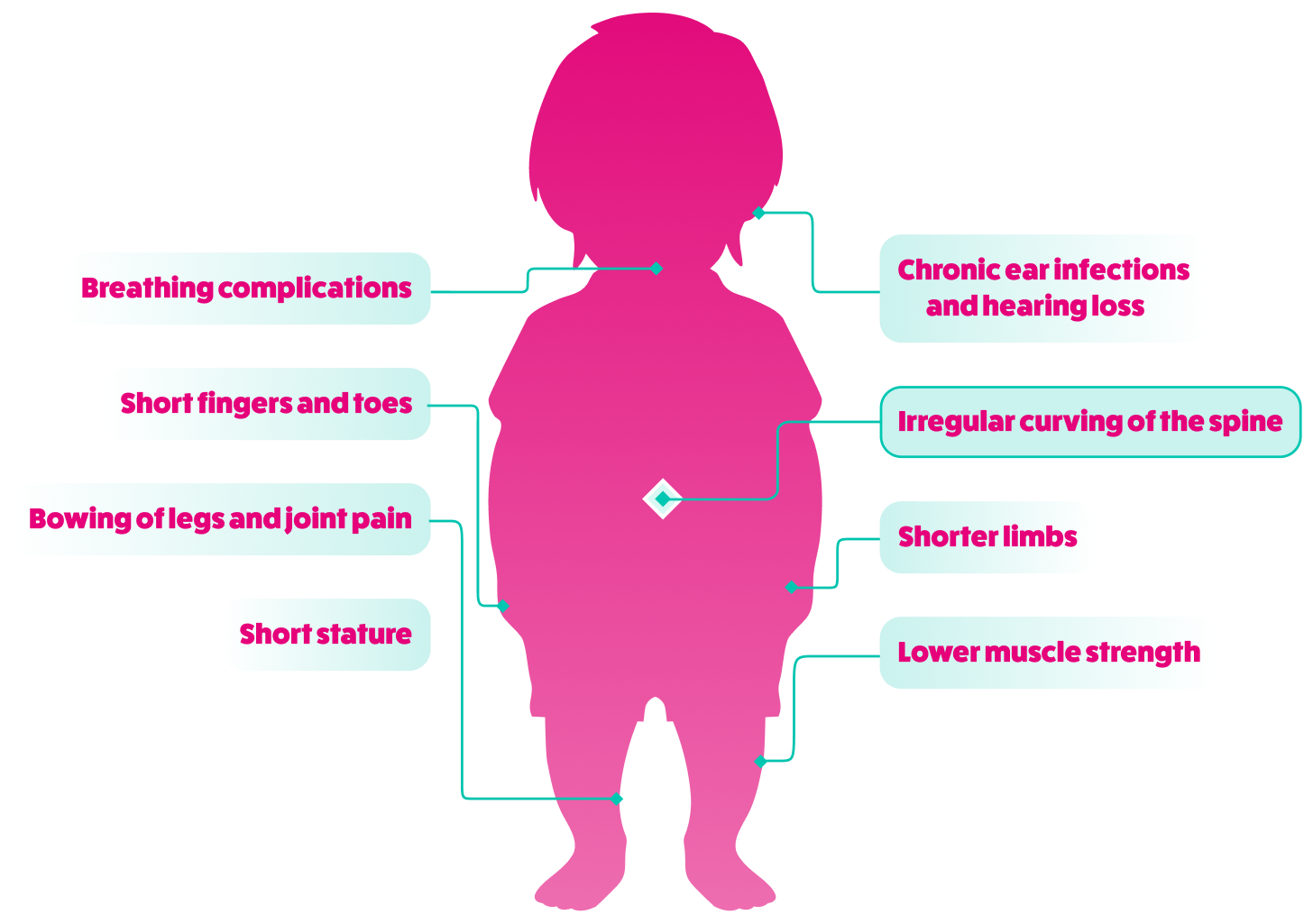
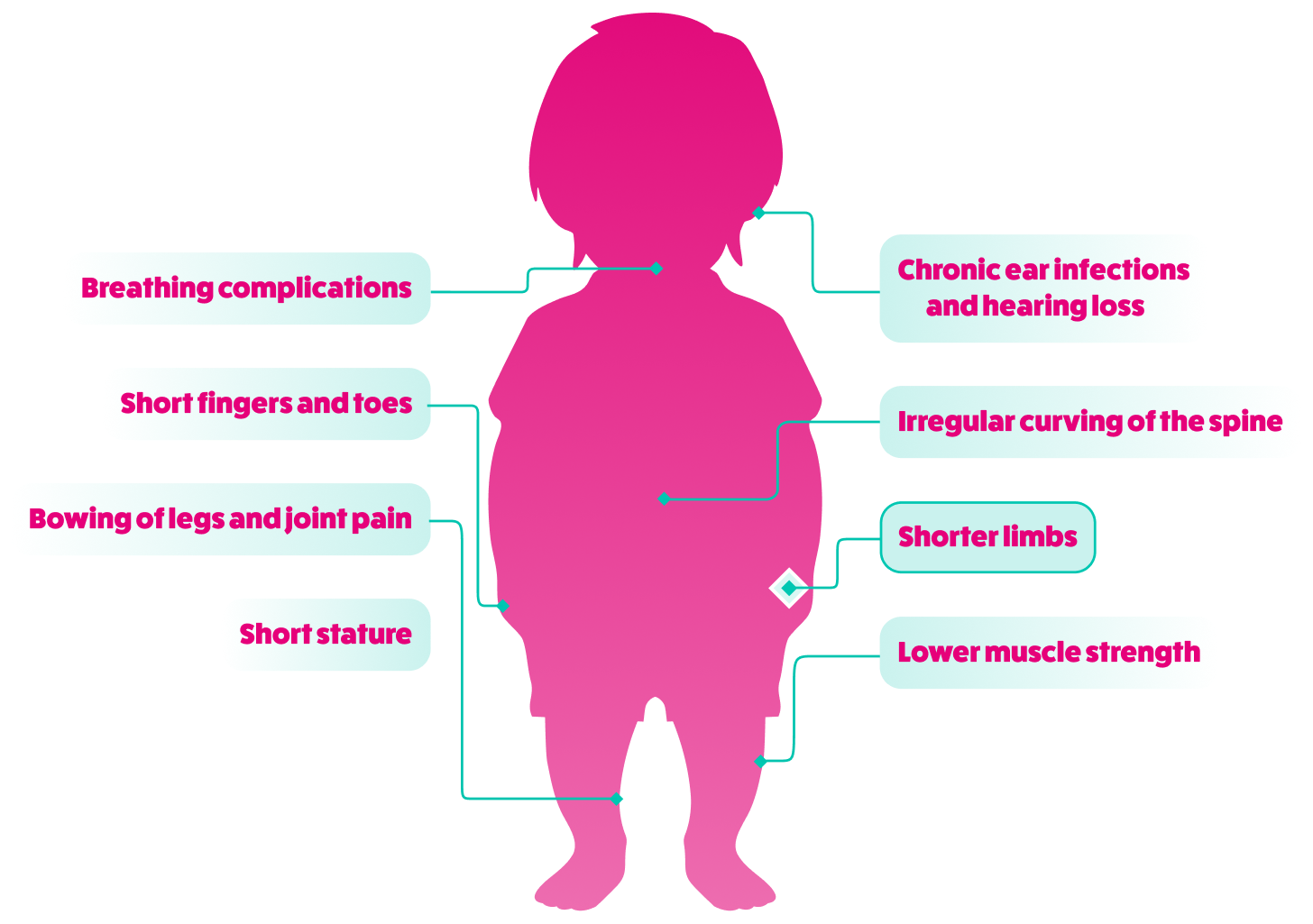
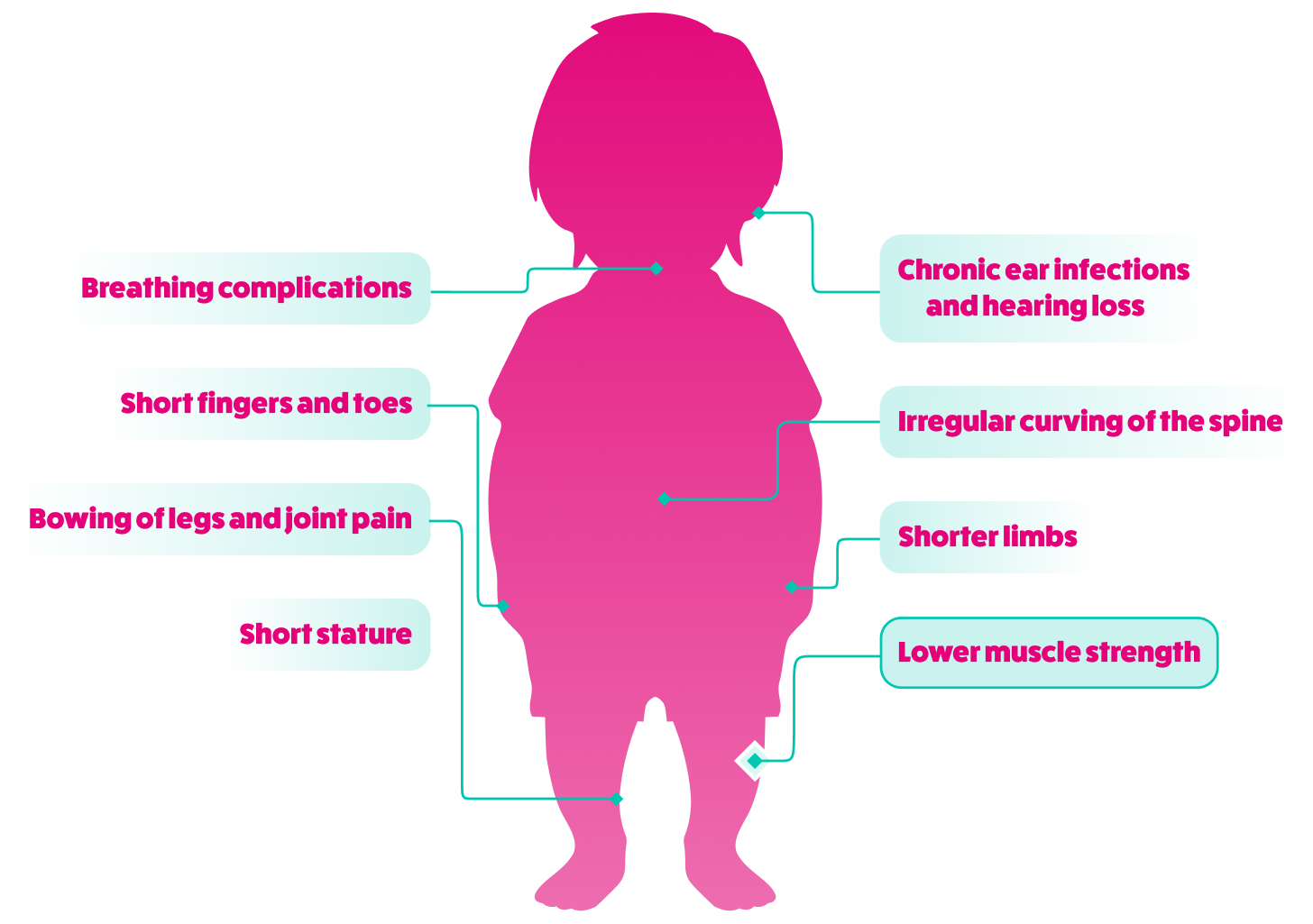
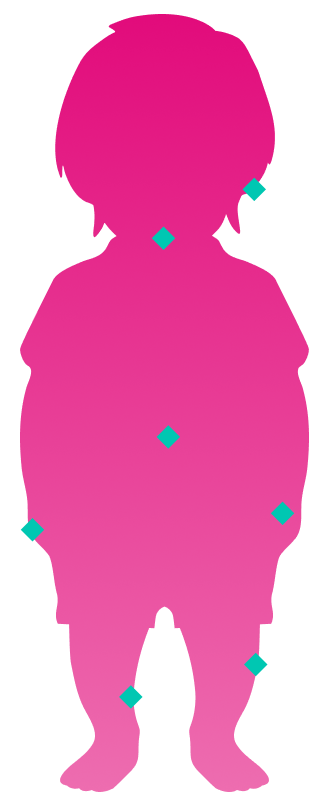
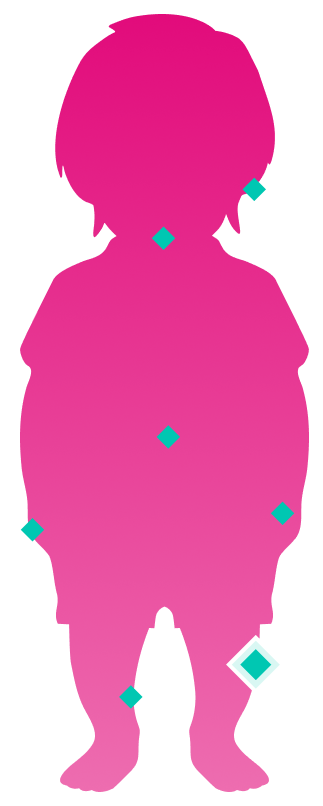
FGFR3 is found throughout the body, not just in bone. This can impact different parts of a growing child’s body:
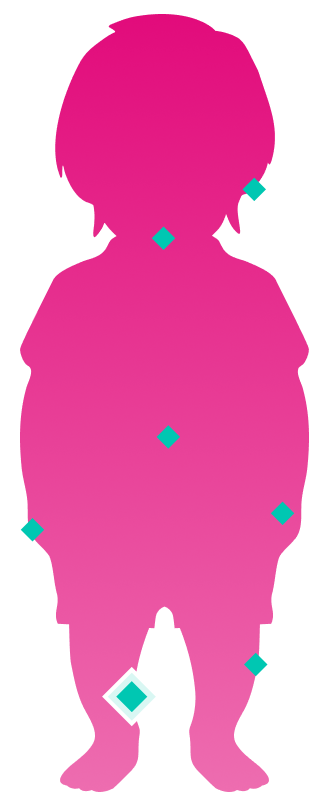
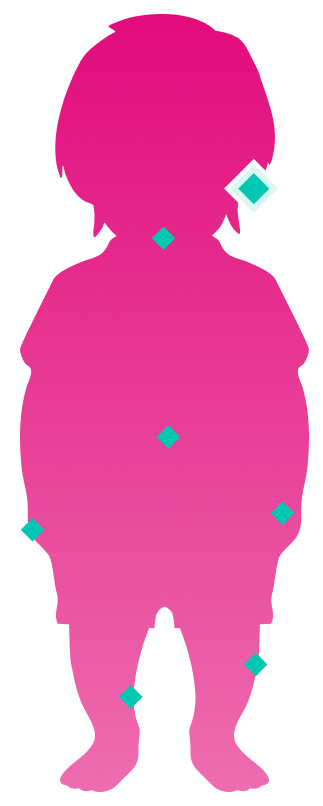
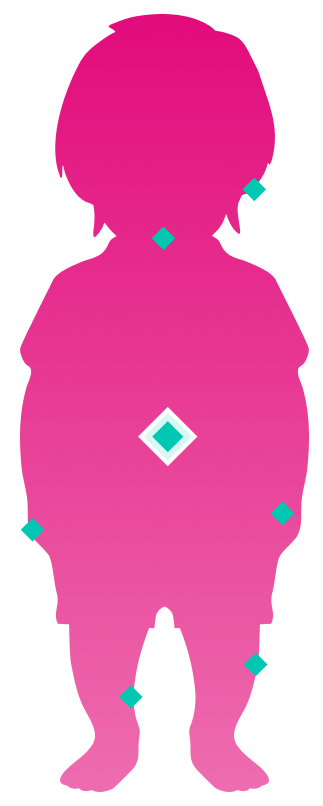
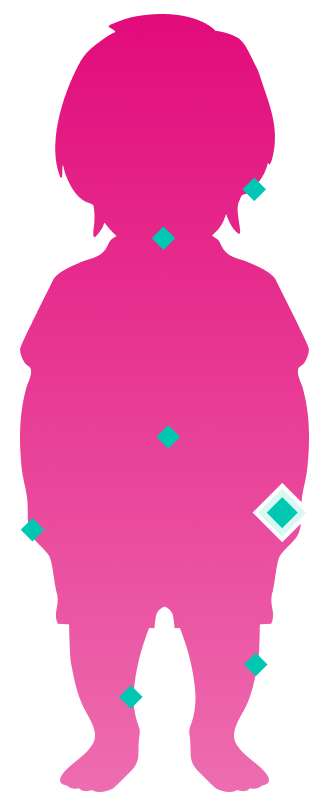
Click through to reveal more information about specific complications.
Short stature
may affect daily activities
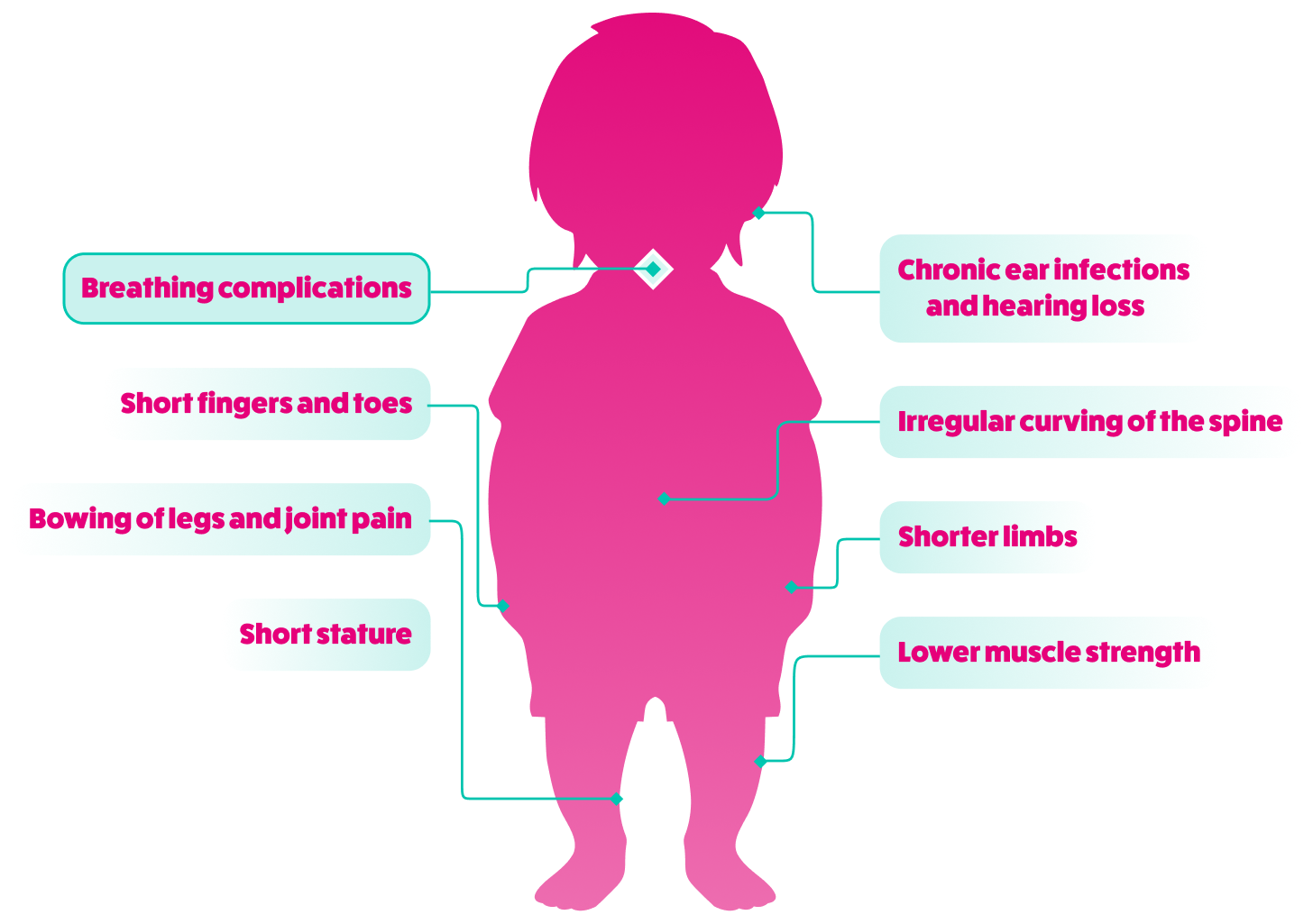
Breathing complications
may lead to poor sleep and daytime tiredness
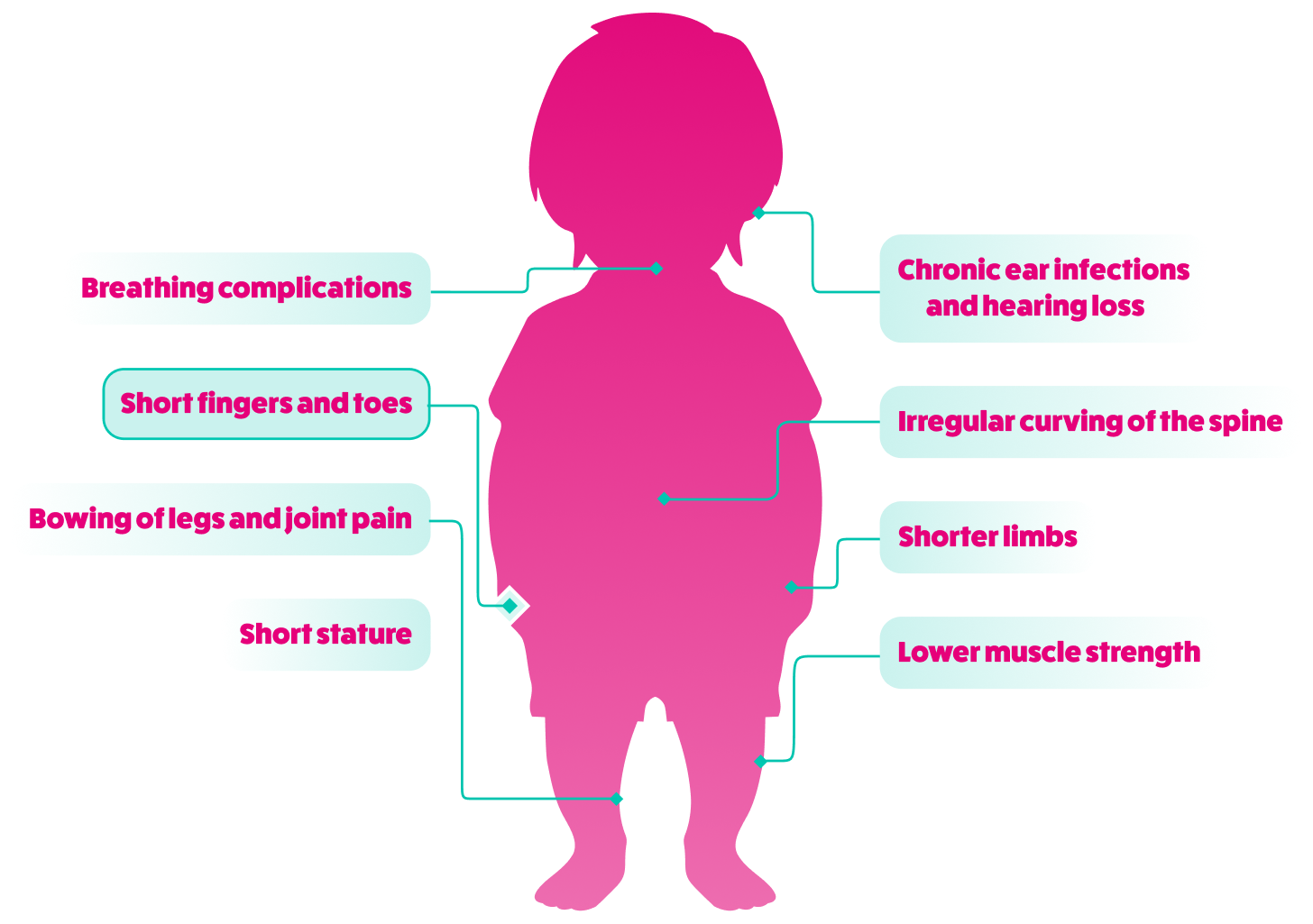
Short fingers and toes
can make it harder to grip or handle small objects
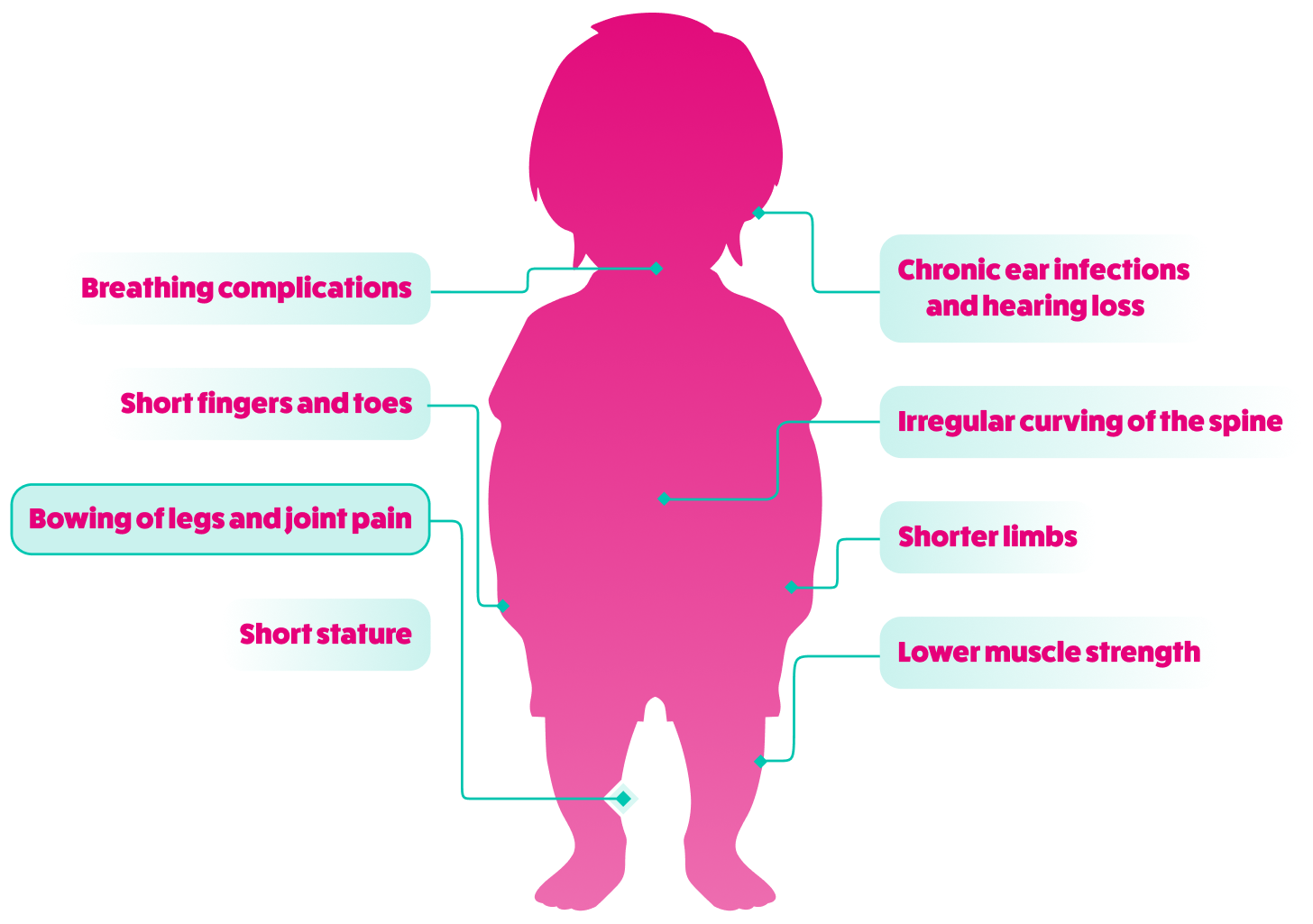
Bowing of legs and joint pain
may cause discomfort when walking or standing
Chronic ear infections and hearing loss
can cause discomfort and affect hearing or speech development
Irregular curving of the spine
may cause back pain or affect posture
Shorter limbs
can make it harder to reach or move in certain ways
Lower muscle strength
can make some movements more difficult or require extra effort
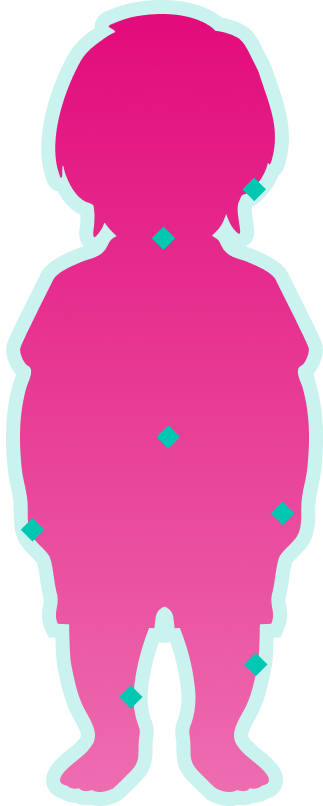
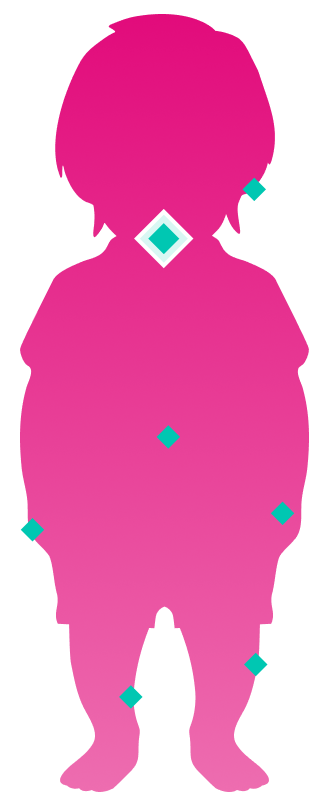
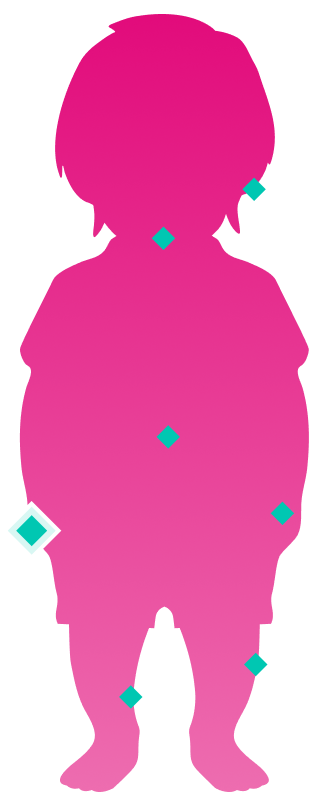
This interactive diagram shows how achondroplasia affects different body systems including stature, breathing, limbs, joints, hearing, spine, and muscle strength. Click on areas of the body to learn about specific health impacts.
Achondroplasia has effects throughout the body:
The spine, joints, muscles, ears, and airways can all be affected
Because some parts of the body like arms and legs grow differently than the trunk, achondroplasia can also cause differences in bodily proportions
You may want to seek guidance from a specialized facility called a skeletal dysplasia center.
Common myths aboutachondroplasia
MYTH
Achondroplasia is always inherited.
FACT
Most cases of achondroplasia occur spontaneously. About 80% of children with achondroplasia are born to parents of average height.
MYTH
Achondroplasia only affects a child's height.
FACT
Achondroplasia can affect multiple areas of health beyond height. It can also affect a child's spine, joints, muscles, hearing, and breathing.
MYTH
Care for achondroplasia is only focused on managing complications and providing support—not treating the root cause.
FACT
Managing achondroplasia can be more than just handling health complications and providing support. There are treatments available that can help address the underlying cause of achondroplasia—the overactive FGFR3 gene.